


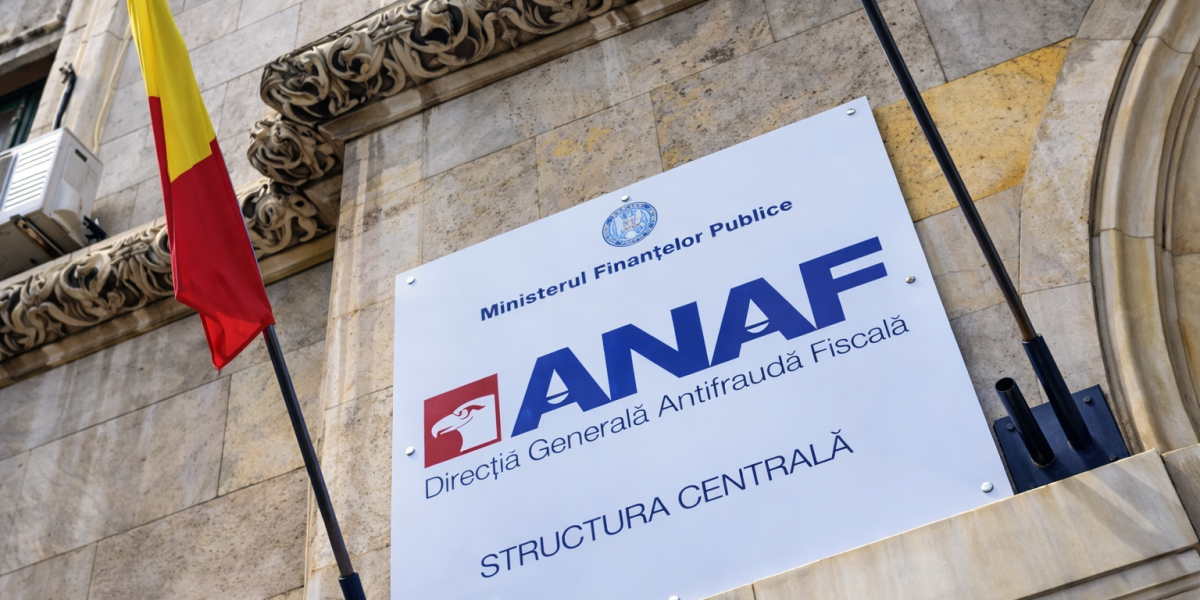
Under what conditions does a company become Tax Inactive in 2026: NAFA criteria, statutory deadlines and the lawyer’s role in prevention and challenging decisions
Accurate and timely financial reporting is a fundamental requirement in the tax administration of a company, and current tax legislation requires the submission of annual financial statements in accordance with the legal calendar. The press release issued by the National Agency for Fiscal Administration on February 11, 2026, firmly announces that, starting January 1, 2026, new measures resulting from recent amendments to the Fiscal Procedure Code through legislation on the efficiency of public resources will be implemented for those companies that do not comply with their reporting obligations. The status of an inactive taxpayer does not exempt an entity from its obligations to declare and pay taxes, fees, and contributions owed. Still, it has fiscal and administrative effects that directly impact the operation of a company. This article analyses the conditions under which a company may be declared fiscally inactive in 2026, the legal deadlines for filing, the practical consequences of this declaration, and the role of the lawyer in preventing and challenging NAFA decisions.
In this context, the Romanian Law Firm Pavel, Mărgărit and Associates provides specialized legal services in tax law and recommends seeking the assistance of a Bucharest attorney, a public administrative law specialist and a financial law practitioner who may offer comprehensive legal assistance in dealings with the tax authorities, including during NAFA inspections, preparation of documentation, risk assessment and representation in challenge or suspension proceedings before the competent courts. Such representation may include handling tax disputes, assisting where a company must formally disagree with a tax decision, or representing clients by a litigator in Romania or a litigation lawyer in Romania in complex fiscal matters. Furthermore, a commercial lawyer and corporate lawyer may assist with procedures to set up a company in Romania, start a business in Romania, manage starting up your own business in Romania, open a limited company, and provide best incorporation services or comprehensive business incorporation services, ensuring compliance from incorporation to ongoing fiscal obligations.
Tax lawyer in Romania. Who is subject to the new provisions, and when does the verification of companies begin
The new fiscal provisions introduced through the NAFA press release apply to all legal entities, namely companies, with regard to the obligation to file annual financial statements. In practice, this means that, for 2026, NAFA may initiate verification procedures through inspections and, where applicable, declare a company tax inactive if it fails to submit its financial statements within a maximum of 5 months following the statutory filing deadline established by the applicable fiscal legislation. Such verification may lead to a formal tax decision, a subsequent tax assessment, and potentially to complex tax disputes if the company decides to disagree with a tax decision and seek judicial review that could culminate in a tax court decision.
Other situations in which a company may be considered fiscally inactive are also specified, such as:
- the company does not fulfill any of its reporting obligations under the law during a calendar semester;
- the central tax authority finds that it does not operate at its declared tax domicile, which reflects the lack of a real economic presence;
- the company has registered temporary inactivity with the trade registry or the term of ownership of the space used as its registered office has expired.
By reiterating these situations, NAFA emphasizes the importance of complying with tax obligations and highlights the institution’s commitment to combating tax evasion and ensuring fair tax treatment for all taxpayers.
The verification of tax inactivity status is carried out by NAFA only for financial statements whose statutory filing deadline occurs after the entry into force of the law, meaning that this year the analysis will concern financial statements with a filing deadline in 2026. Therefore, the control does not operate retroactively with respect to prior financial years but targets only those financial statements whose filing deadline falls after the new regulation entered into force. These legislative measures were introduced to strengthen fiscal discipline and increase transparency within the financial circuit, aiming to limit practices whereby companies without real activity continue to appear in tax records, as well as to reduce the phenomenon of inactive entities used for illicit purposes such as tax evasion, fraud or fictitious transactions.
In this framework, lawyer for taxes, and fiscal lawyer, or VAT lawyer, may assist companies in evaluating their fiscal exposure, preventing adverse tax decisions, managing tax disputes, and, where required, representing them in proceedings related to enforcement in Romania, forced execution in Romania, or other enforcement proceedings in Romania deriving from a contested tax assessment.
Financial lawyer in Romania. Statutory deadlines for filing financial statements
The accounting and fiscal framework in force establishes clear deadlines for filing annual financial statements, depending on the nature and legal form of the entity, as regulated by Article 36 of the Accounting Law no. 82/1991. Failure to observe these deadlines, starting in 2026, entails the risk that NAFA will apply the tax inactivity criterion, which may affect not only the fiscal standing of the entity but also its relationship with third parties and public institutions.
Companies governed by Law no. 31/1990, national companies and corporations, autonomous administrations and national research and development institutes are required to file their financial statements by 31 May inclusive of the financial year following the reporting year. For other legal entities, the deadline is 30 April inclusive of the financial year following the reporting year. Non-compliance may trigger a tax assessment and, where companies disagree with a tax decision, litigation that could result in a binding tax court decision.
For entities that have opted for a financial year different from the calendar year, the law establishes deadlines calculated from the closing date of the chosen financial year. Legal entities in the first category must file within 150 days, while those in the second category must file within 120 days from the end of the respective financial year. These deadlines are essential in avoiding adverse tax decisions, complex tax disputes, and potential enforcement proceedings in Romania.
The press release also specifies that entities which have not carried out any economic activity since incorporation may file a declaration of inactivity with NAFA within 60 days from the end of the financial year. Thus, verification of the new tax inactivity status will be carried out both for entities obliged to file financial statements and for those that have not conducted economic activity since incorporation. However, even where a company is declared inactive, it is not exempt from filing periodic tax returns and paying taxes, duties and social contributions due to the state budget. Compliance obligations remain in force, and failure to meet them may trigger fiscal administration procedures, including inspections and collection measures that may escalate to forced execution in Romania, or other enforcement proceedings in Romania.
A lawyer for taxes, or VAT lawyer, acting where necessary as a litigator in Romania, may assist a company in understanding statutory filing deadlines and ongoing fiscal obligations, providing specialized advice to consolidate a compliance strategy and minimize the risk of sanctions, tax disputes, or an unfavorable tax court decision. Moreover, a commercial lawyer, business lawyer, or corporate lawyer may evaluate, in the case of an entity already classified as tax inactive, the measures required for fiscal reactivation, protect the economic activity and the entrepreneurs’ interests, and provide assistance in procedures such as set up a company in Romania, start a business in Romania, manage starting up your own business in Romania, open a limited company, and offer best incorporation services and integrated business incorporation services.
Business lawyer in Romania. Consequences following the declaration of tax inactivity: VAT cancellation, fiscal record entries, trade registry blockages
The declaration of a company as tax inactive entails significant practical and legal implications. An immediate and operationally sensitive consequence is the cancellation of the company’s VAT registration code. This means that, during the period in which the VAT code remains cancelled, the entity is required to collect VAT for the economic activities it performs but is not entitled to deduct input VAT incurred on acquisitions made during that period. The VAT collected must be reported in the relevant tax returns and paid by the 25th inclusive of the month following the one in which the tax became due.
Another effect of the declaration of tax inactivity is the recording of such status in the fiscal record of the legal entity and, in certain cases, in that of the legal representatives who held that capacity during the period in which the tax inactivity was established. This record may have repercussions on the company’s evaluation by business partners or financial institutions and may affect access to loans or other commercial facilities.
In addition, certain operations before the National Trade Registry Office, such as registrations, entries or amendments to company information, may be refused or hindered where tax inactivity is recorded in the fiscal record. These administrative blockages may generate delays, additional costs and complications for the normal functioning of the entity.
A tax lawyer, fiscal lawyer, or VAT lawyer, acting as a litigator in Romania, may assess the concrete impact of these consequences on the company’s activity and provide practical solutions for managing fiscal and administrative effects, representing the company in tax disputes, challenging a tax decision, contesting a tax assessment, or seeking remedies against an unfavorable tax court decision, as well as providing assistance in matters concerning forced execution in Romania and related enforcement proceedings in Romania.
Administrative lawyer in Romania. Prevention and challenging NAFA decisions. The role of the tax lawyer in limiting risks
Within the relationship with the tax authorities, a taxpayer subject to an NAFA inspection or the recipient of an administrative fiscal act has at its disposal, under the Fiscal Procedure Code and administrative litigation framework, a series of legal remedies to challenge a tax decision, contest a tax assessment, or seek annulment of an administrative act and suspension of enforcement in Romania pending final adjudication. The procedure https://avocatpavel.fr/loi-nordis-2025-en-roumanie-garanties-et-obligations-pour-les-promoteurs-et-les-acquereurs-dappartements-en-phase-de-projet/
for contesting a tax decision represents the first remedy available to the taxpayer before the issuing authority, by submitting a claim within 45 days from communication, accompanied by factual and legal arguments for annulment, thereby allowing the company to formally disagree with a tax decision without immediately resorting to court proceedings. Subsequently, the taxpayer may initiate administrative litigation seeking annulment before the competent court, potentially leading to a binding tax court decision.
Challenging a fiscal administrative act does not automatically suspend its effects or the commencement of forced execution in Romania, which makes it necessary to expressly request suspension of the administrative act or suspension of enforcement under the Administrative Litigation Law, depending on the circumstances. Such request must be filed within the statutory procedural deadlines, generally within 30 days from communication of the act, and may be submitted together with the annulment action or separately, accompanied, where appropriate, by evidence of imminent damage. The court may grant suspension if the legal conditions are met, thereby blocking the application of the fiscal act’s effects and protecting the taxpayer from enforcement proceedings in Romania until a final tax court decision is rendered.
“Compliance with deadlines for filing financial statements and periodic fiscal obligations must be approached rigorously in order to avoid the declaration of tax inactivity and to protect the company’s rights and assets,” stated Dr. Radu Pavel, Managing Partner of the Romanian Law Firm Pavel, Mărgărit and Associates.
The Romanian Law Firm Pavel, Mărgărit and Associates has extensive experience in tax law, business law and the management of fiscal litigation following NAFA inspections and can assist you in procedures such as challenging a tax decision, contesting a tax assessment, initiating actions leading to a tax court decision, seeking suspension of enforcement in Romania or forced execution in Romania, and providing full representation before tax authorities and courts through an experienced lawyer for taxes, fiscal lawyer, acting as a litigation lawyer in Romania. In addition, a commercial lawyer, business lawyer, or corporate lawyer specialized in corporate structuring may assist with procedures to set up a company in Romania, start a business in Romania, guide you in starting up your own business in Romania, help you open a limited company, and provide best incorporation services and comprehensive business incorporation services tailored to your operational and compliance needs.
Don’t navigate these challenges alone. Contact Us today for expert assistance tailored to your needs.
In conclusion, the declaration of tax inactivity in 2026, as a result of failure to comply with the obligation to file financial statements or other fiscal administration criteria, may generate significant effects for a legal entity, such as VAT cancellation, impact on the fiscal record and administrative difficulties before the Trade Registry. Maintaining fiscal compliance, anticipating risks and preparing a solid legal strategy are essential for any company. The Romanian Law Firm Pavel, Mărgărit and Associates provides specialized legal assistance for affected companies, supporting clients with tailored strategies and professional representation in all stages of interaction with tax authorities and administrative courts, including complex tax disputes, proceedings that require a litigation lawyer in Romania, and matters involving enforcement proceedings in Romania and forced execution in Romania.
Pavel, Margarit and Associates Law Firm is one of the top law firms in Romania, providing high-quality legal services. The firm’s clients include multinational and domestic companies of great magnitude. In 2025, the law firm’s success stories brought it international recognition from the most prestigious international guides and publications in the field. As a result, Pavel, Margarit and Associates Law Firm ranked 3rd in Romania in the Legal 500’s ranking of business law firms with the most relevant expertise. The law firm is internationally recognized by the IFLR 1000 Financial and Corporate 2025 guide. Additionally, Pavel, Margarit and Associates Law Firm is the only law firm in Romania recommended by the international director of Global Law Experts in London in the Dispute Resolution practice area. All relevant information about Pavel, Margarit and Associates Law Firm can be found on the website www.avocatpavel.com.